Solar Panels and Installation — Done Properly, Explained Honestly
If you're weighing up solar and every quote looks different, the missing piece is the installation itself. A typical UK system costs £5,500–£9,500 installed (DESNZ 2025/26 medians: £1,780 per kW up to 4 kW, £1,697 per kW for 4–10 kW, Declared Net Capacity basis) — and whether it pays back in 8 years or disappoints for 25 comes down to how the work is done. We explain the work.
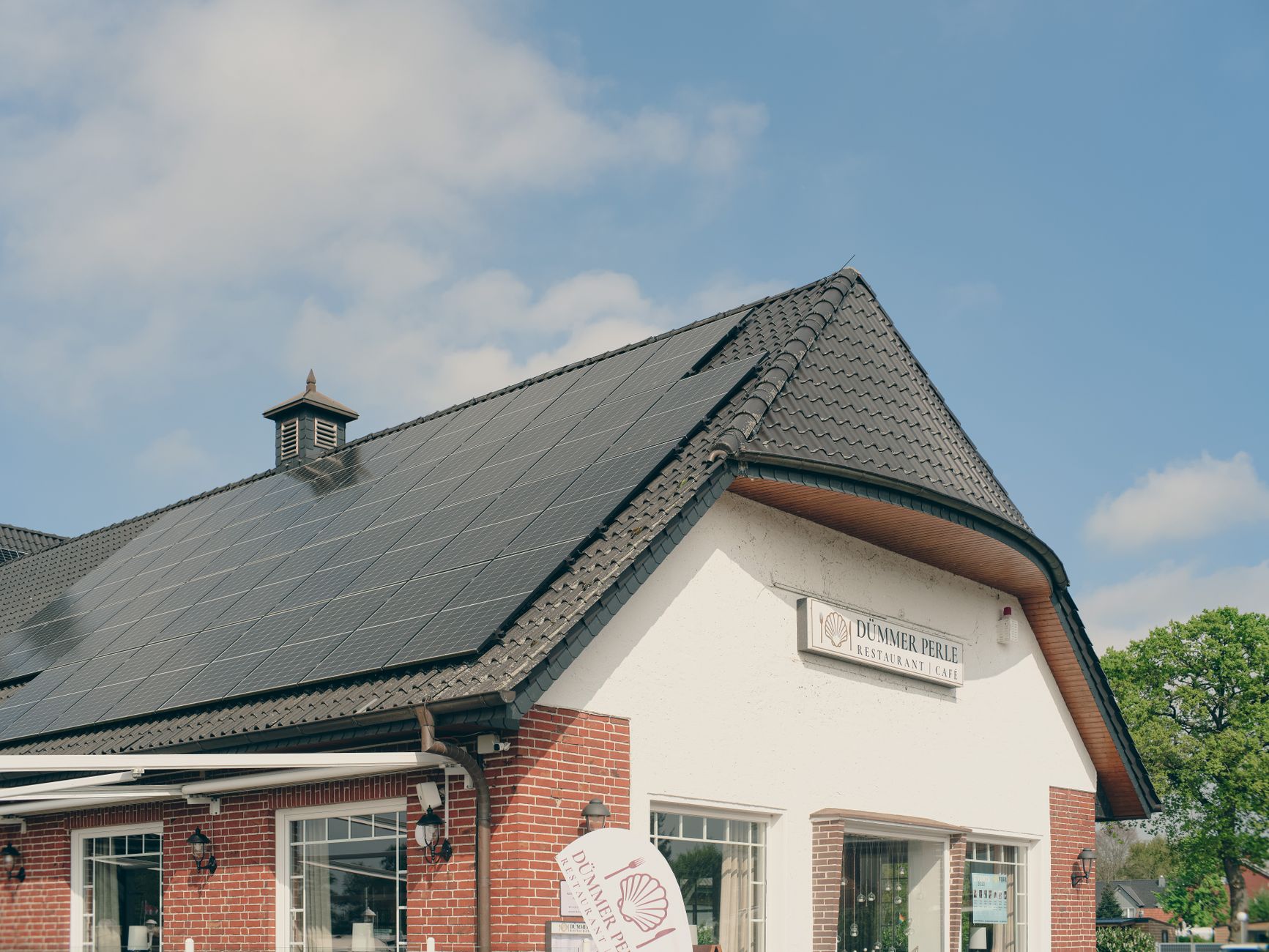
The quick answer
A typical UK home solar installation costs £5,500–£8,000 for a 3.5 kWp system fully installed (as at spring 2026, with 0% VAT applying until 31 March 2027), takes one to two days on the roof inside a four-to-eight-week journey from survey to switch-on, and should end with five documents in your hand: the MCS certificate, an Electrical Installation Certificate, DNO notification evidence, warranty registrations, and an insurance-backed workmanship warranty. Miss any of those and the system is worth less than you paid for it.
Same panels, very different outcomes
Most solar websites sell panels. Almost none explain the installation - and the installation is where a solar project succeeds or fails. The panels on a roof in Leeds are the same panels as on a roof in Plymouth; what differs is whether the array was strung correctly for the shading pattern, whether the roof anchors hit rafters or just felt, whether the inverter went in a cool ventilated space or a baking loft, whether the DNO paperwork (G98 or G99) was submitted properly, and whether you received the MCS certificate, Electrical Installation Certificate and DNO notification that make the system insurable, warrantable and eligible for export payments. This site is about the work itself: how a professional UK solar installation runs from survey to handover, what it should cost in 2026, how the process differs by roof type, and how to judge whether an installer will do it properly.
- We photograph every roof fixing before the panels cover it - the evidence goes in your handover pack
- DNO paperwork submitted at the right stage: G99 approval before energisation, never after
- A written planning position with every survey - including the new August 2026 permitted development rules
- Batteries sited to PAS 63100, not to the easiest cable run
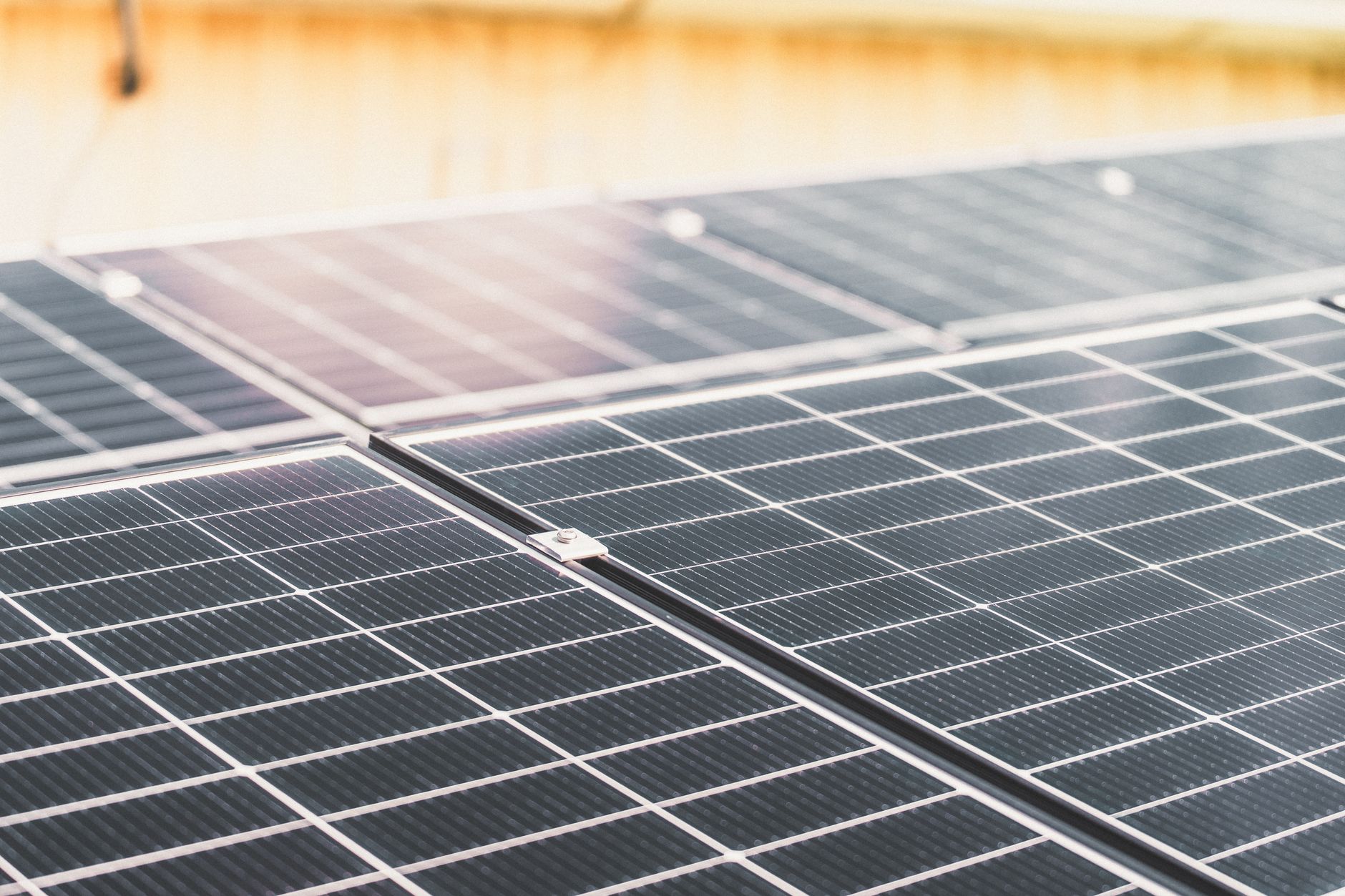
What UK solar installation actually looks like in 2026
From survey to switch-on, step by step
No mystery, no pressure — this is the sequence a properly-run job follows, and roughly how long each stage takes.
- 01Week 1
Survey — the real kind
A surveyor checks your roof structure from the loft, your consumer unit, shading and orientation. A quote produced without looking at either is guesswork.
- 02Week 1–2
Design and itemised proposal
System sized from your consumption, not your roof area. You get an itemised written price, the planning position confirmed, and the projected generation.
- 03Week 2–6
Paperwork before tools
G98 notification or — for larger and battery systems — a G99 application approved by your DNO before anything is energised. Scaffold booked, kit ordered.
- 041–2 days on site
Installation and commissioning
Anchors into rafters (photographed), rails, panels, inverter and any battery sited properly, then commissioning tests and a walkthrough of your monitoring.
- 05Within 2 weeks
Handover pack
MCS certificate within ~10 working days, Electrical Installation Certificate, DNO evidence and warranty registrations — the paperwork that makes the system insurable and export-eligible.
Every roof takes a different installation
Pick the guide that matches your property — each explains the method, the 2026 cost and the compliance for that install type.
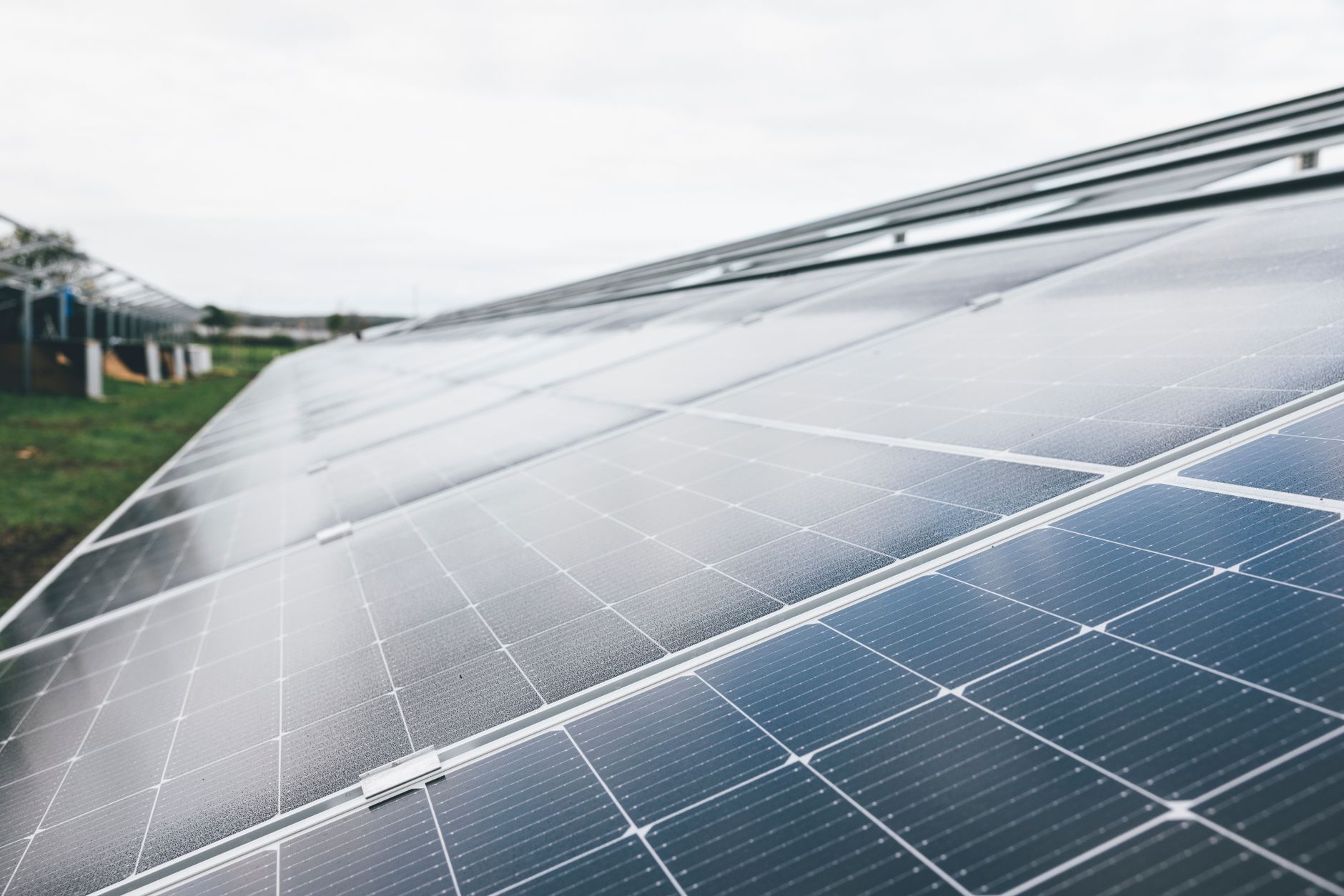
Commercial Solar Installation
30-250 kWp rooftop. 6-year typical payback. £30,000-£250,000.
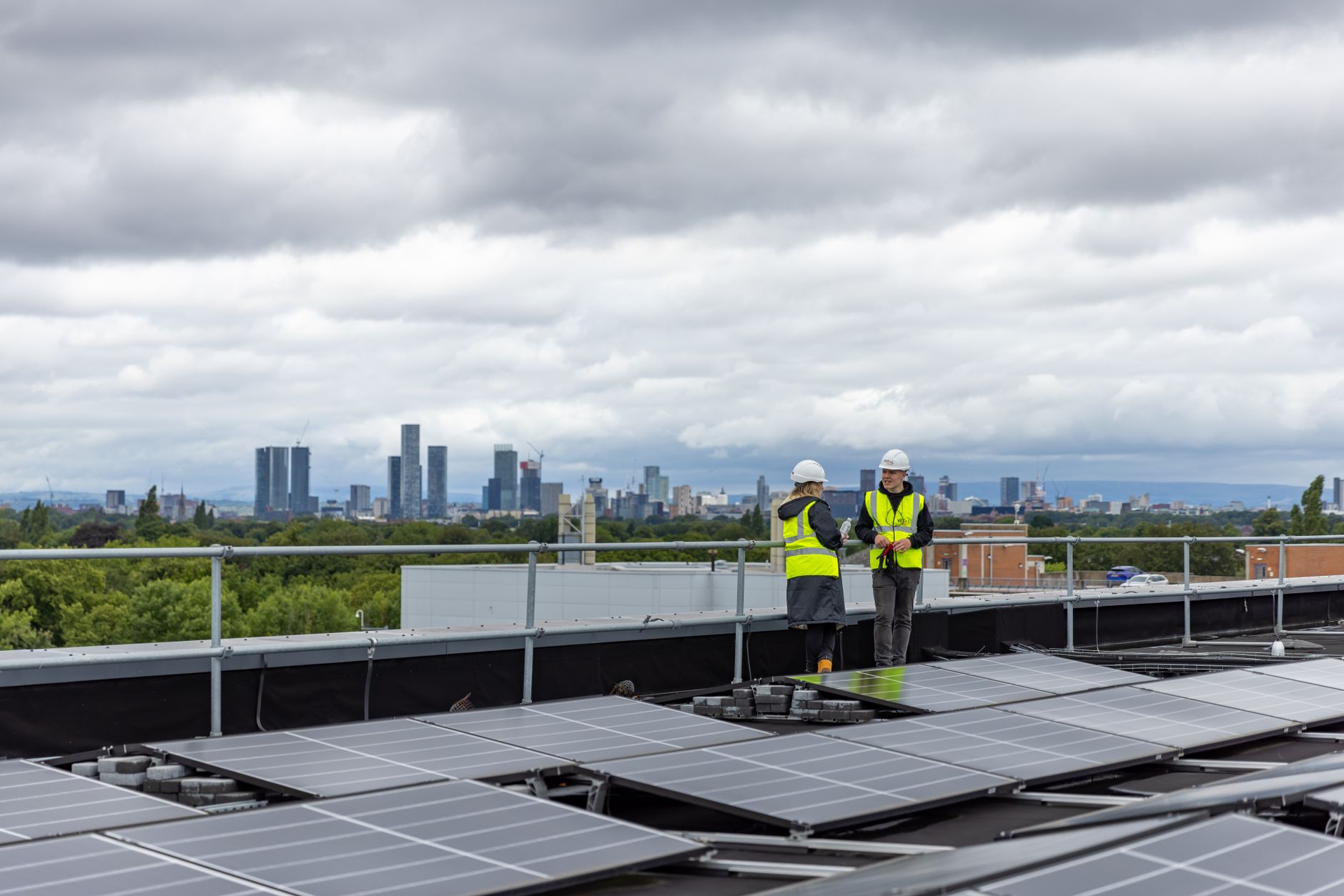
Flat-Roof Solar Installation
3-10 kWp domestic / 20-100 kWp commercial. 8-year typical payback. £6,000-£11,000 domestic; £20,000-£90,000 smaller commercial.
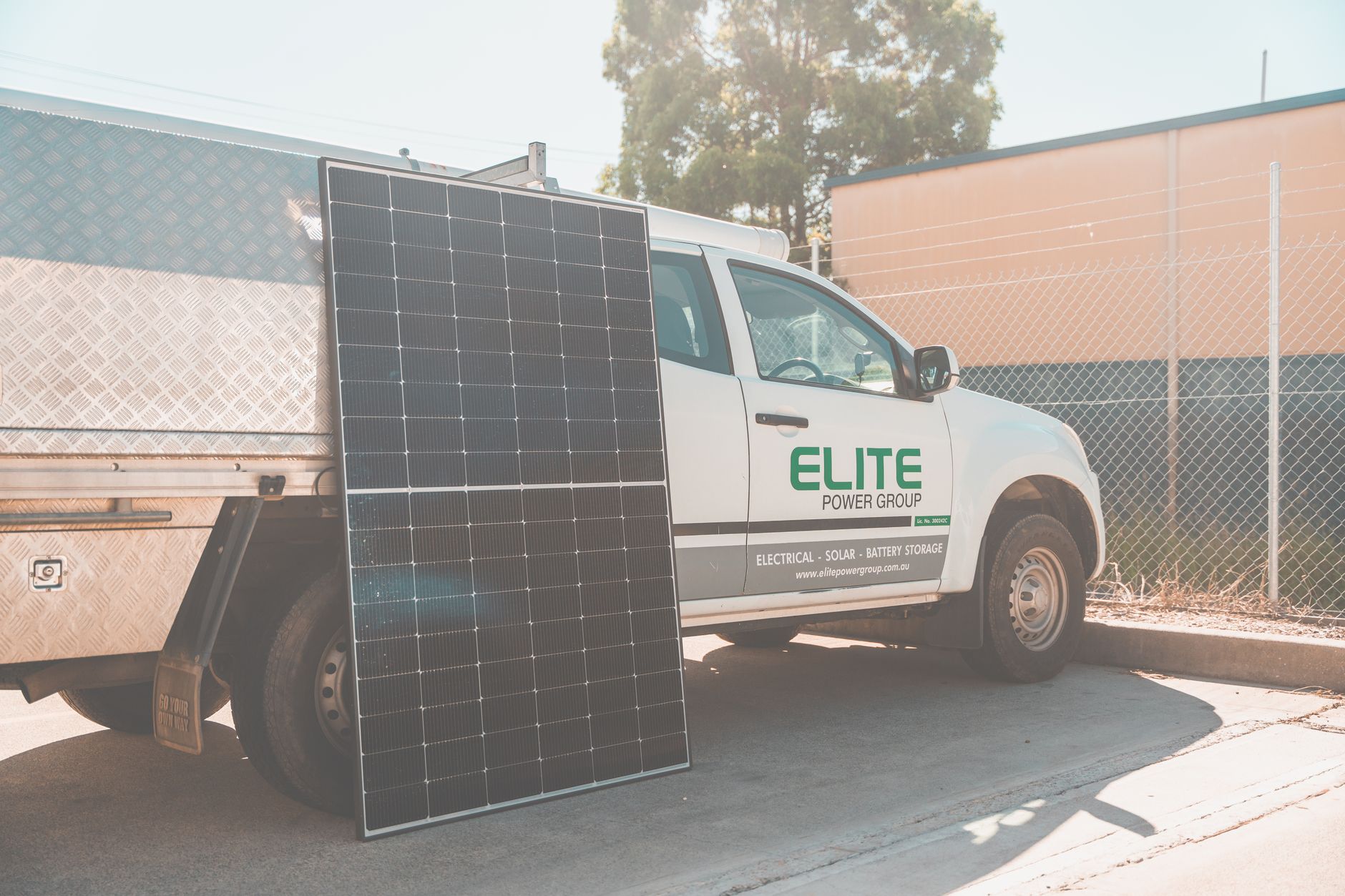
Ground-Mounted Solar Installation
4-12 kWp domestic / paddock-scale. 9-year typical payback. £7,000-£16,000.
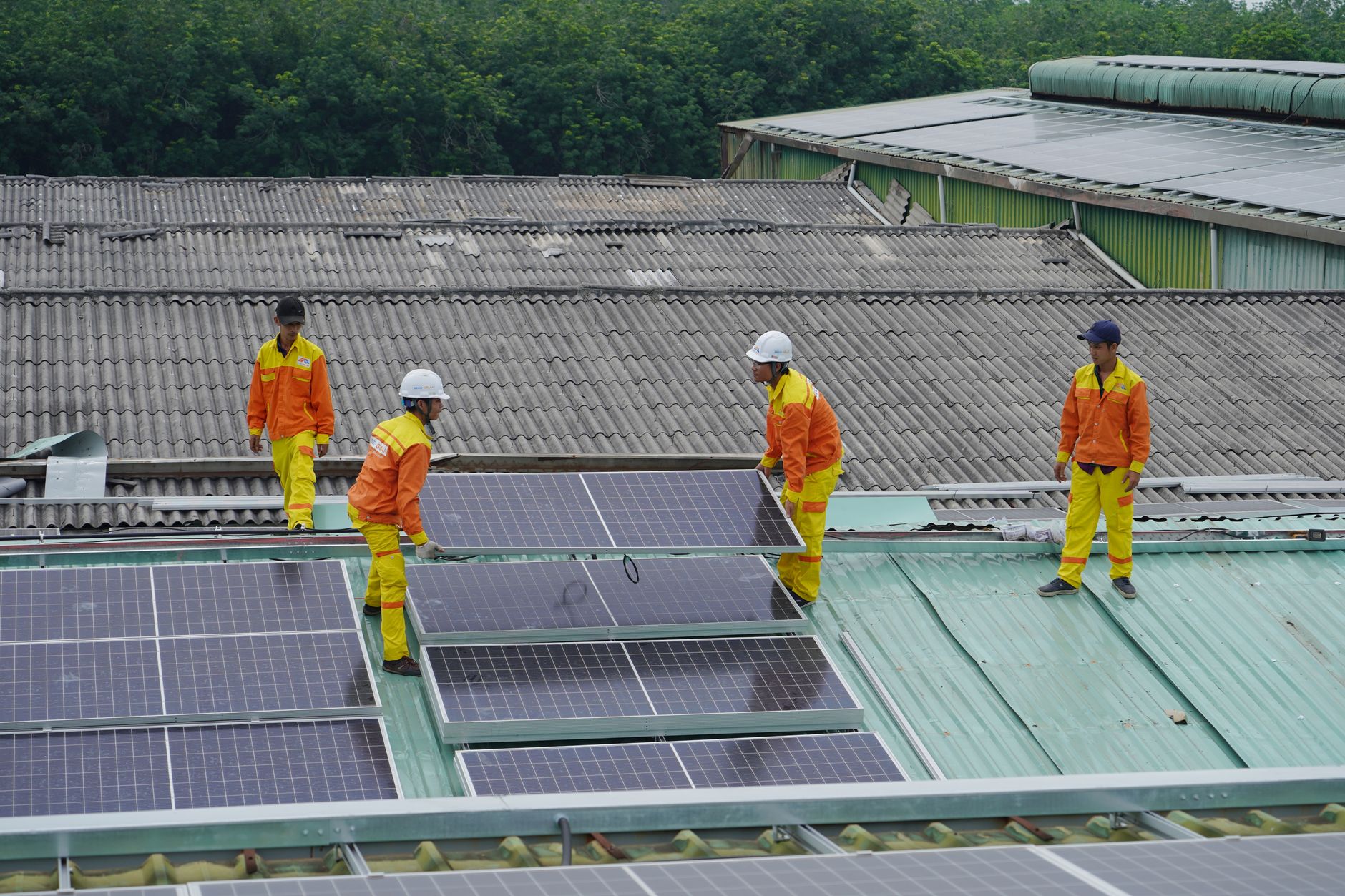
In-Roof (Integrated) Solar Installation
3.5-6 kWp. 9-year typical payback. £6,500-£11,000.
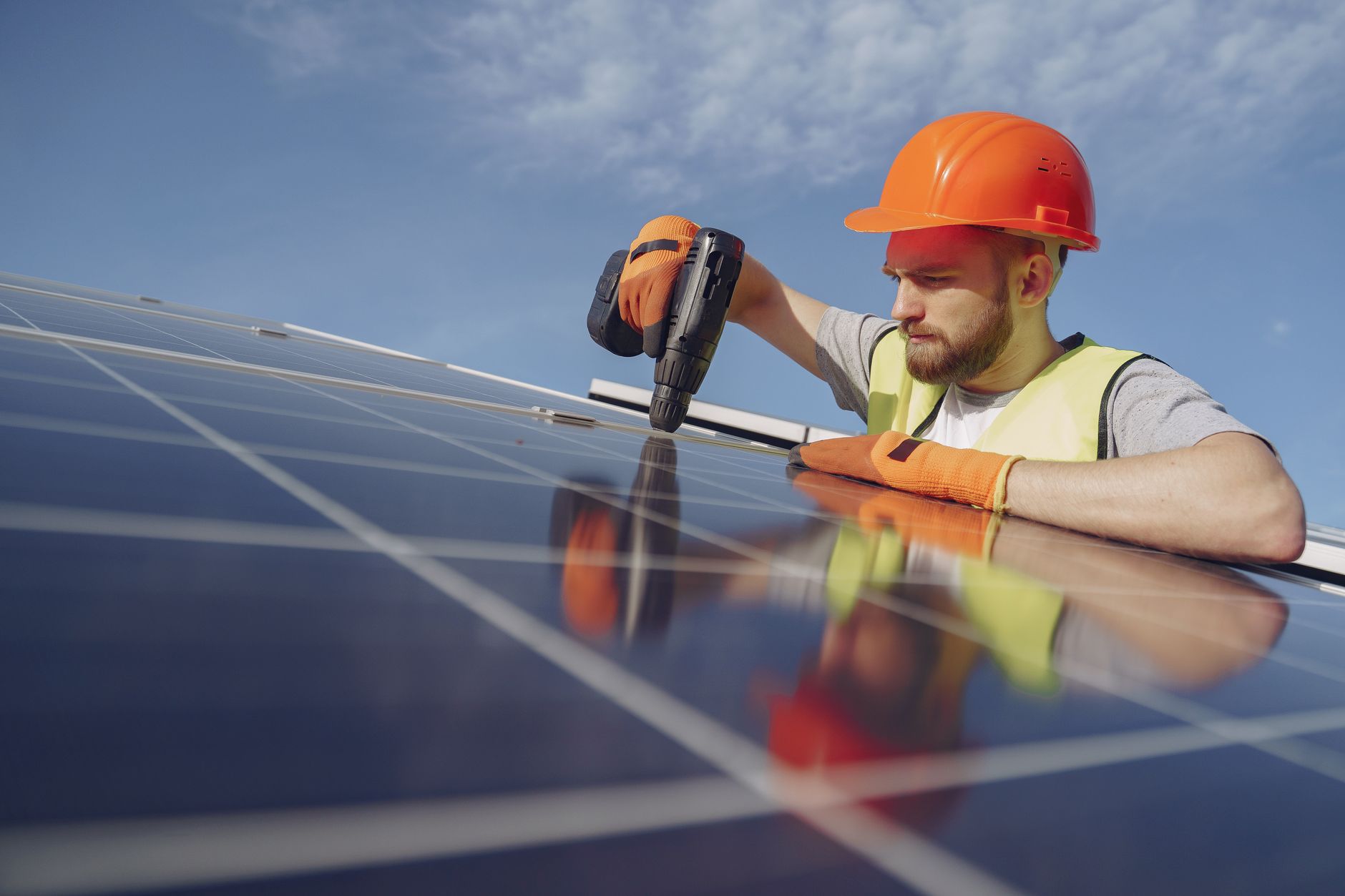
Pitched-Roof Solar Installation
3.5-6 kWp (8-14 panels). 8-year typical payback. £5,500-£9,500.
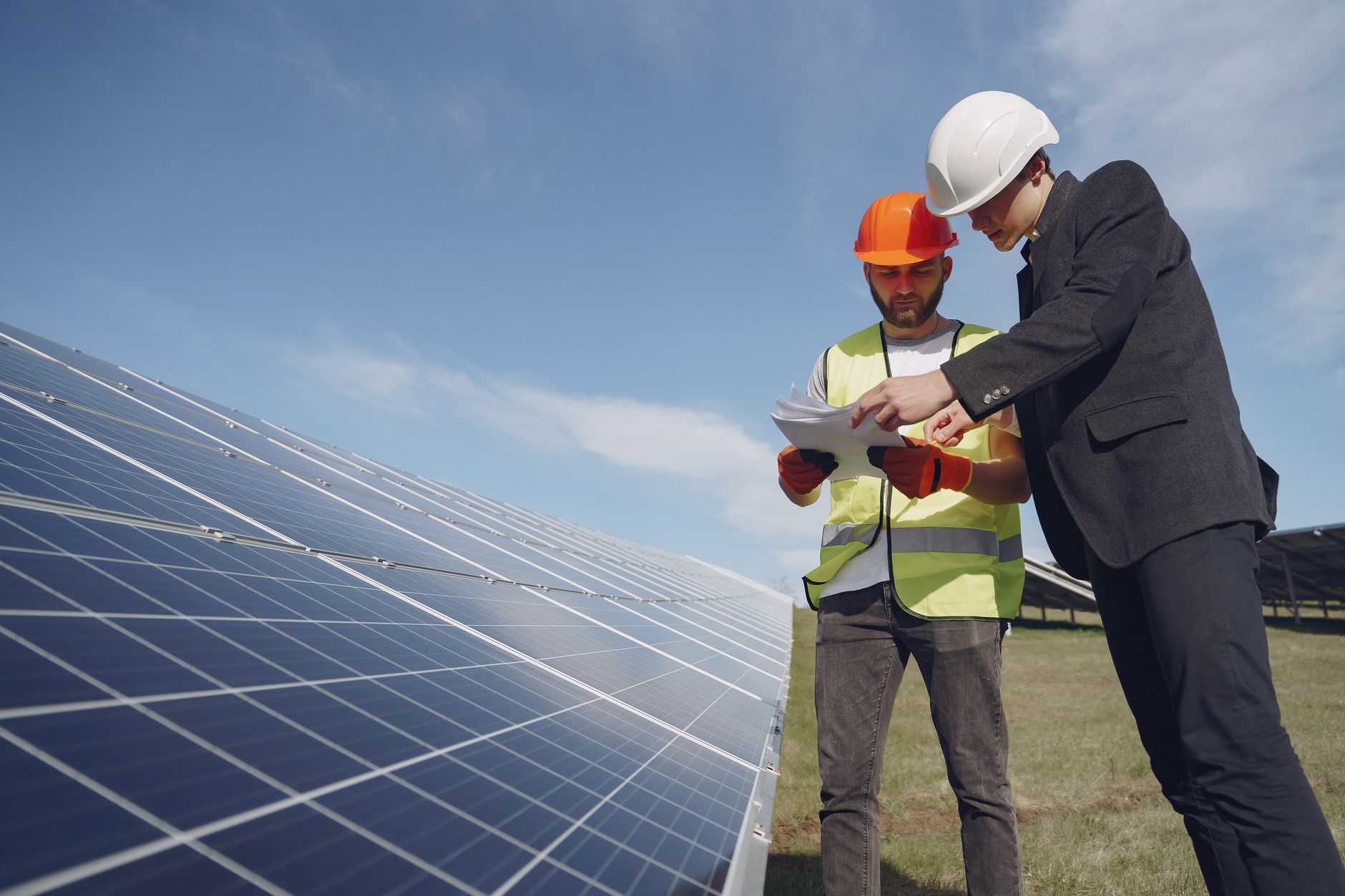
Solar Battery Installation
5-15 kWh storage alongside 3.5-8 kWp PV. 9-year typical payback. £2,500-£7,000 retrofit battery-only; £9,000-£15,500 combined solar-plus-battery.
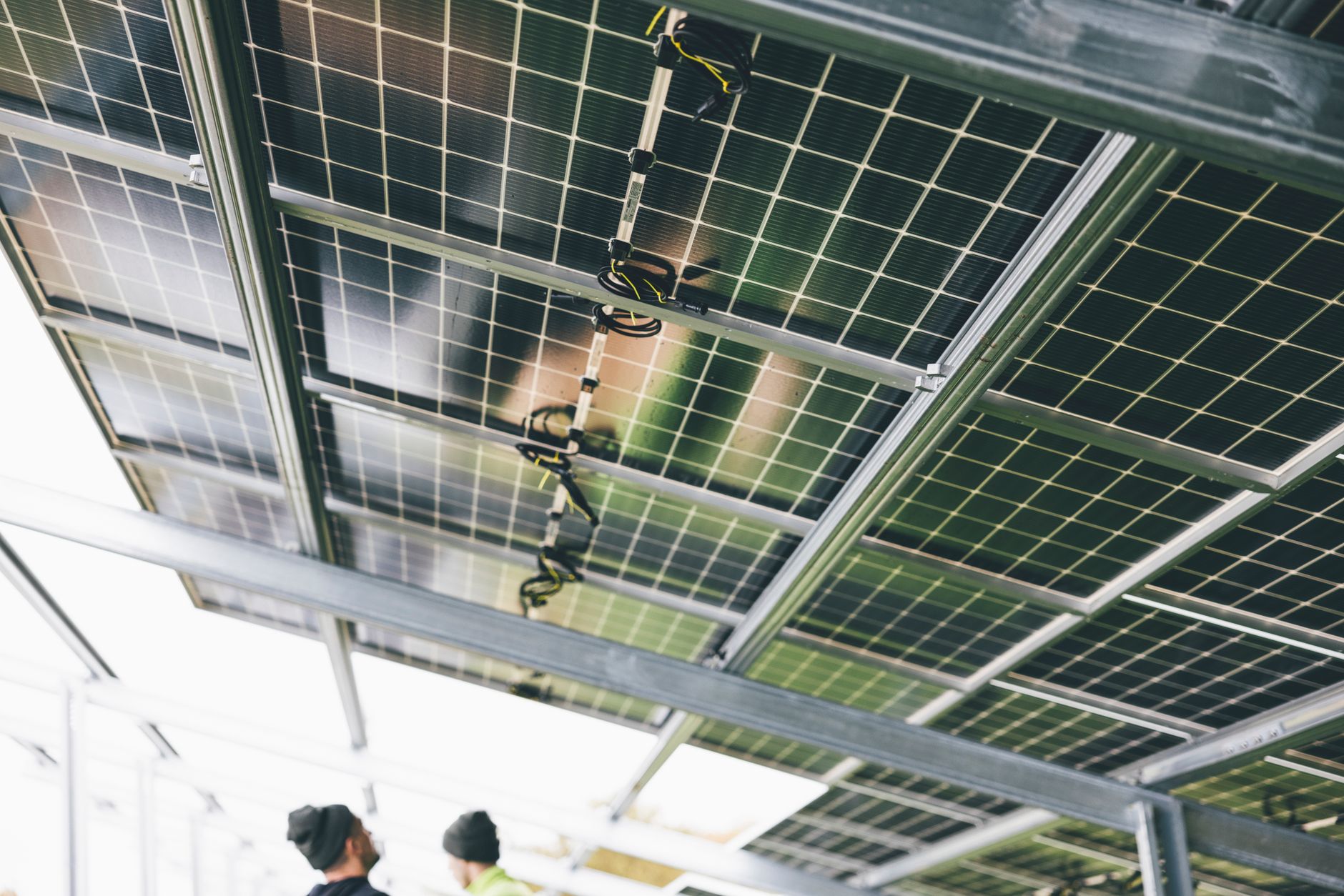
4.4 kWp on-roof installation with battery, 1930s semi (scenario)
A typical retrofit: 10 x 440 W panels across two roof faces (SE/SW split), hybrid inverter and 9.5 kWh battery in the garage per PAS 63100 siting, G99 applied for at survey and approved before energisation. Scaffold up day zero, panels and electrics completed in two days, fixing photos in the handover pack.
The honest case
Stop renting your electricity — but only if the sums work for your roof
Every month your direct debit buys electricity you'll never own. A properly-installed system redirects that spend into generating kit on your own roof: it pays itself off, then keeps paying you for decades. That's the case for solar. The case for care is just as real — a corner-cut install on the wrong roof can stretch payback past 12 years, and we'd rather tell you that at survey than oversell you. The honest worth-it assessment covers both sides.
Use it, don't spill it
A unit you use yourself is worth your import price (~26p); an exported unit earns your Smart Export Guarantee rate (roughly 12–16p on current tariffs, dated on our cost guide). Batteries and east-west arrays exist to close that gap — which is why they're sizing decisions, not extras.
Two real dates, no countdown gimmicks
0% VAT on home solar and battery installation runs to 31 March 2027, then reverts to 5% (VAT Notice 708/6). And from 27 August 2026 the permitted development rules for house solar relaxed (SI 2026/896). Both are sourced, dated facts — the only kind of urgency you'll read here.
Who turns up in year eight?
Three protections outlive any installer: 25-year panel performance warranties, 10–12-year inverter warranties, and the insurance-backed workmanship warranty MCS consumer codes require — it stands even if the installing firm ceases trading. Paperwork pays out; verbal promises don't.
A properly-run installation vs a corner-cut one
| Properly-run install What you should insist on | Corner-cut install What cheap quotes often hide | |
|---|---|---|
| Loft and fuse-board checked before quoting | ||
| Anchors fixed into rafters and photographed | ||
| G99 approved before energising (battery systems) | ||
| Battery sited to PAS 63100 (not the loft) | ||
| Scaffolding itemised in the quote | Sometimes | |
| MCS certificate + EIC + DNO evidence at handover | Chased for months | |
| Told honestly when a roof does not suit solar |
The questions buyers actually ask us
How do I know an installer won't damage my roof?
Because the fixing method is checkable, and we encourage you to check it. On a tiled roof every anchor must land in a rafter with the tile above worked around it, never glued or resting on felt. A good installer photographs the fixings before the panels cover them and puts the photo set in your handover pack. If an installer can't show you their fixing photos from previous jobs, that tells you something.
Every quote I've had is a different price. Why?
Usually four things: whether scaffolding is included (GBP 600-1,200), inverter class (a budget string inverter versus a hybrid ready for a battery), whether the DNO application and MCS paperwork are handled for you, and whether the roof survey was real or done from Google Earth. Ask each quoter to itemise those four lines and the mystery usually disappears. The DESNZ 2025/26 median installed price is GBP 1,780 per kW for systems up to 4 kW and GBP 1,697 per kW for 4-10 kW - a long way either side of that deserves an explanation.
Is my roof strong enough?
An on-roof array adds roughly 15-20 kg/m2 - most post-war UK trussed roofs in fair condition carry that comfortably, but 'most' is not 'all'. A proper survey checks rafter size and spacing, existing sag, and the covering's remaining life. Slate, single-lap tile and older cut-timber roofs need more care, and a ballasted flat-roof system needs a dead-load check. If the answer is genuinely no, the honest options are structural work, an in-roof system at re-roof time, or a ground mount - not pretending.
The full set — including "when is solar NOT worth it" — lives on the honest assessment page.
The five documents a proper installation ends with
The hardware is only half of what you're buying. A UK solar installation is finished when five documents are in your hand, and each one has a job: the MCS certificate (issued within about ten working days) unlocks Smart Export Guarantee registration — no certificate, no export payments. The Electrical Installation Certificate under BS 7671 is what your insurer and, eventually, your conveyancer will ask for. DNO notification or G99 approval evidence proves the system is legally connected. Warranty registrations start the clock on the 25-year panel and 10–12-year inverter cover. And the insurance-backed workmanship warranty is the one that answers "who fixes it if the installer's gone?". Our FAQ page covers what to do if any of them fail to arrive.
How to judge an installer before they touch your roof
Four checks separate the professionals from the rest, and none needs technical knowledge. First, verify the company on the MCS website — certification is checkable in seconds, and "MCS-approved" is not a term anyone legitimate uses. Second, ask to see fixing photographs from previous jobs; crews that fix anchors properly photograph them, because it's their proof too. Third, ask who handles the DNO paperwork and when — the right answer names your network operator and, for battery systems, puts the G99 application before installation. Fourth, ask what happens if your roof turns out not to suit solar; the honest answer includes losing the sale. Anyone offering a same-day discount to sign now fails the fourth test automatically. For a battery, add one more check: its proposed location against the PAS 63100 siting rules for home batteries.
Where to start, depending on where you are
Still deciding whether solar makes sense at all? Start with the honest worth-it assessment — it includes the cases where the answer is no — and the myths page for the claims you'll meet along the way. Comparing quotes already? The 2026 cost guide shows what moves a price by thousands and the savings calculator gives you an instant indicative figure with no details asked. Want to understand the work itself? The installation-type guides cover pitched, in-roof, flat-roof, ground-mount, battery and commercial methods, and the installation-day walkthrough shows the sequence hour by hour. Checking your own city? The local guides cover roof stock, planning quirks and your network operator for thirty UK cities. And when you're ready for a real number, the quote form takes four short steps — with no phone call unless you ask for one.
Local installation guides
Roof stock, planning quirks, the local DNO and what installation involves city by city.
London
Greater London. 8,908,081 population. Greater London Authority.
Birmingham
West Midlands. 1,141,816 population. Birmingham City Council.
Leeds
West Yorkshire. 793,139 population. Leeds City Council.
Sheffield
South Yorkshire. 584,853 population. Sheffield City Council.
Manchester
Greater Manchester. 568,996 population. Manchester City Council.
Bradford
West Yorkshire. 546,412 population. Bradford Council.
Installation questions, answered straight
Timescales, planning, paperwork and the questions that catch corner-cutters.
How long does solar panel installation take?
The on-roof work for a typical domestic system is one to two days: scaffold up beforehand, mounting and panels on day one, electrical connection and commissioning finishing day one or two. The full journey from accepted quote to switch-on is typically four to eight weeks, driven by scaffold scheduling, kit lead times and (for larger or battery systems) DNO approval. Commercial installations run two to six weeks on the roof inside a longer programme set mainly by the G99 connection process.
Do I need planning permission for solar panels?
Usually not, in England: rooftop panels on most houses are permitted development under Part 14 Class A of the GPDO, and from 27 August 2026 the rules were rewritten (SI 2026/896) - roof-slope panels keep their 0.2 m projection limit, while wall-mounted panels on a house may now project up to 0.4 m (0.2 m where the wall fronts a highway). Flat-roof domestic arrays must stay within 0.6 m of the roof's highest point. Listed buildings always need consent, conservation areas restrict some elevations, and ground-mounted arrays over 9 m2 need an application. Scotland and Wales run their own rules. A proper installer confirms the planning position in writing at survey.
What actually happens on installation day?
Scaffold is already up. The roof crew sets out the array, lifts tiles to fix anchors into the rafters, fits rails, and lands the panels - photographing fixings as they go. In parallel the electrician runs the DC cabling to the inverter position, fits the inverter, isolators and any battery, and connects into your consumer unit. Then commissioning: insulation-resistance and polarity tests, inverter configuration, generation meter check, and a walkthrough of monitoring. You should end the day with the system generating and a clear list of what paperwork follows.
What paperwork should I receive after installation?
Five things, and each one matters: the MCS certificate (within about 10 working days - it unlocks Smart Export Guarantee registration), the Electrical Installation Certificate under BS 7671, the DNO notification or G99 approval evidence, the manufacturer warranty registrations (panels typically 25 years performance, inverter 10-12), and the insurance-backed workmanship warranty. Missing paperwork is not a technicality - no MCS certificate means no export payments, and conveyancers increasingly ask for the set at house sale.
Is scaffolding always needed - and why is it so expensive?
Almost always, yes. Working-at-height law makes roof work from ladders indefensible for a crew installing panels, so a scaffold (or occasionally a tower/edge-protection system on easy single-storey roofs) goes up first. It is typically GBP 600-1,200 of a domestic quote - a real cost from a separate trade, and one of the main reasons quotes differ. If a quote is suspiciously cheap, check whether scaffolding is actually in it.
What is MCS certification and why does it matter?
MCS is the UK's installation standards scheme for small-scale renewables. It certifies that the installing company works to the relevant installation standard and that your specific installation is registered. The practical stakes: no MCS certificate, no Smart Export Guarantee payments, and many insurers and lenders expect it. Check a company on the MCS website before you sign - certification is verifiable, claimed 'approval' is not a thing.